How to Find Free Furniture: Local Help, Exchanges and Pickup Checks
Document-based research. This guide does not claim personal use or verified earnings. Read our disclosure.
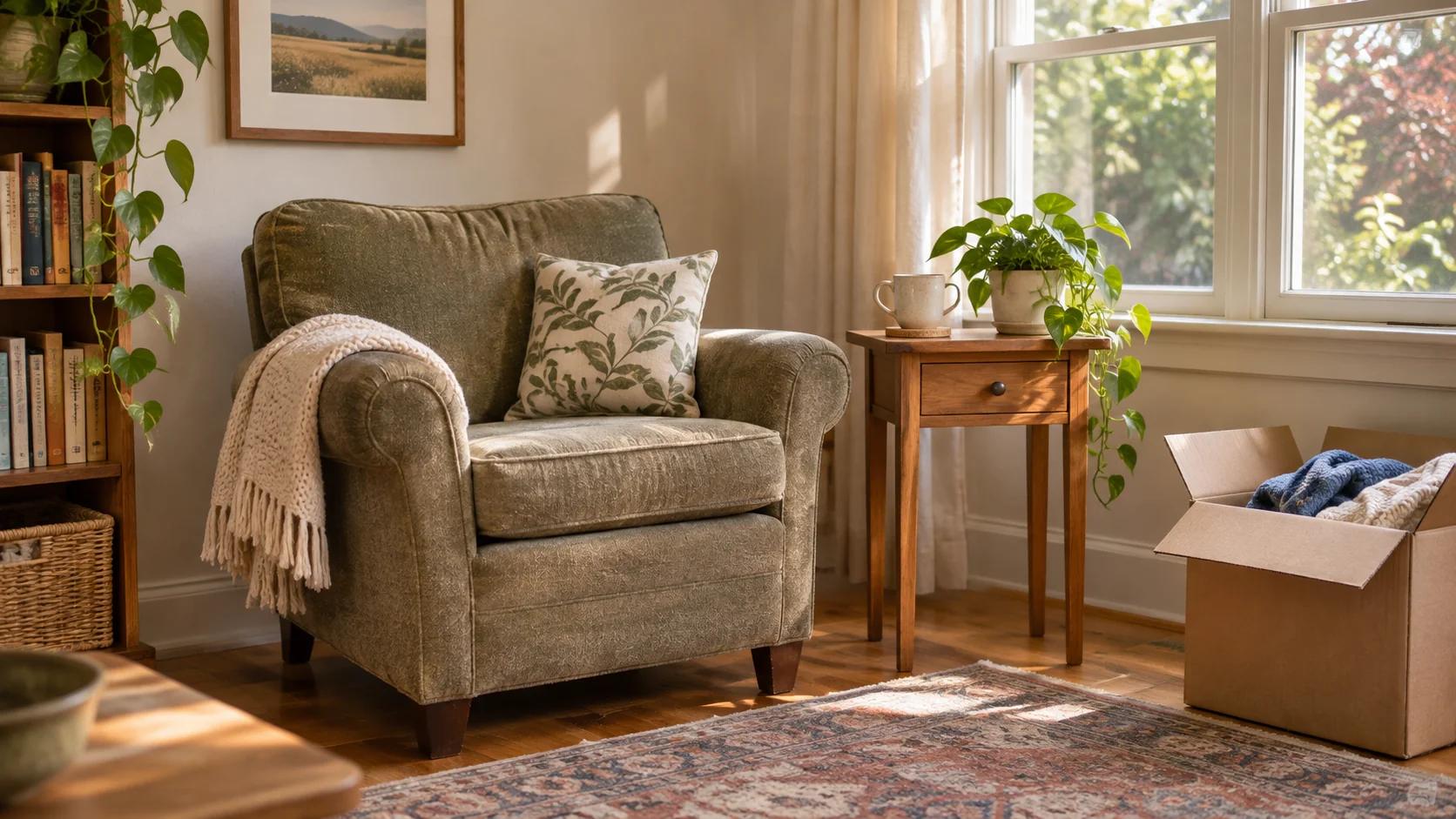
Furnishing a home can be expensive, but a local furniture bank, community exchange or neighbor may have useful items available at no purchase price. Start with what your household needs most, then check whether the provider requires a referral, has items available and charges for delivery or other services.
In this guide
This guide covers assistance programs, local giveaways, online exchanges and practical checks before pickup. It draws on the MoneyPantry guide to free furniture and the primary sources linked below. We have not applied to these programs or inspected local inventory. Eligibility, costs and availability vary.
Make a short list and measure your space
List the pieces you need first, such as a table, chairs, a bed frame or storage. Measure the room, doors, stairs and elevator before arranging pickup. Ask whether a piece needs assembly and whether you can safely transport it.
An item offered for free is not necessarily free to move. Consider a vehicle, lifting help, packing materials, delivery fees and any building rules. Confirm the full cost before accepting an offer or booking a service.
Ask a caseworker about furniture banks
Furniture banks and related charities may provide donated furnishings to households meeting their local criteria. Some operate only through approved social-service partners. If you have a caseworker, housing-support organization or shelter contact, ask whether they can refer you and what information is needed.
For example, the Furniture Bank of Metro Atlanta says it serves certain households through partner-agency referrals and does not accept drop-ins. The organization lists its own eligibility focus and notes that partner agencies have their own client requirements. This is a local example, not an offer available everywhere.
Ask the referral agency about waiting times, available items, selection appointments and transportation. A referral does not guarantee a particular piece or an immediate delivery.
Check the difference between free furniture and delivery costs
Some organizations provide the furniture itself at no cost while charging a delivery or processing fee. Others may arrange assistance with that cost. The Furniture Bank serving the Greater Toronto Area describes an agency-referral process and asks recipients to review information about subsidized delivery fees.
Confirm the current amount, who pays it, whether pickup is allowed and whether an agency can help. The details for a Toronto organization should not be assumed to apply to Atlanta or to a furniture bank in another community.
Ask local charities and community services
Community organizations, faith groups and housing-support services may know about donated furniture, vouchers, referrals or one-time distribution events. Some programs serve specific locations or circumstances; others may not have a furniture program at all. Contact the local office and ask what is currently available.
Where 211 service is available, ask for local furniture or household-goods assistance and the provider's contact information. Then confirm eligibility, any fees and pickup details with the actual provider. A referral or directory listing is not a reservation.
Look for neighborhood giveaways
Local reuse groups, neighborhood noticeboards and online marketplaces may have free listings for individual pieces. Check the photos and description, ask whether the item is still available and confirm whether it must be collected by a certain time. A seller may offer the furniture for free but be unable to deliver or help carry it.
Use the platform's normal messaging and safety features, choose an appropriate public or otherwise safe meeting arrangement, and avoid sharing unnecessary personal information. Be cautious if a supposed free listing asks for an unexpected advance payment, password or verification code.
Friends, relatives and neighbors may also have furniture they are willing to give away. Explain what you need and whether you can arrange transport. Do not assume a piece left outdoors is available to take; check the owner's permission and local rules.
Inspect secondhand furniture before bringing it home
Look for structural damage, missing parts, unstable legs, sharp edges, moisture and signs of pests. The U.S. Environmental Protection Agency recommends checking secondhand furniture for signs of bed bugs before bringing it into your home. If you are uncertain about an item's condition, you can decline it.
For identifiable products, search the U.S. Consumer Product Safety Commission's recall information and follow the relevant remedy. Do not assume a used item is safe simply because it looks clean. Check that required hardware and instructions are present.
Some furniture can tip over. The CPSC's guidance discusses securing furniture and televisions. Follow the manufacturer's instructions and check with the property owner before attaching anything to a wall.
Plan pickup or delivery
Confirm the dimensions, weight, pickup window and whether the item is on a ground floor or requires stairs. Ask if it can be disassembled, whether the necessary hardware is included and who is responsible for lifting. Do not attempt to move a heavy item alone if it is unsafe.
If delivery is offered, ask for the full price and whether it includes carrying the item into the room, assembly or removal of old furniture. Check whether a caseworker or organization can help with transportation, but do not assume that such help is available.
Questions to ask a provider
- Is the item or program available in my area right now?
- Is a referral, appointment or proof of eligibility required?
- Is the furniture itself free, and are there processing or delivery charges?
- Can I choose items, and does selection depend on inventory?
- Who handles pickup, lifting, stairs and assembly?
- What condition is the item in, and are its parts and instructions included?
Frequently asked questions
Can I walk into any furniture bank?
No. Some require a referral from a partner agency and an appointment. Check the specific organization before visiting.
Does free furniture always include free delivery?
No. A provider can offer furniture at no purchase price while charging for delivery or processing. Ask about the total cost and available assistance.
Are all listings suitable for every household?
No. Size, condition, safety, transport and household needs differ. Inspect the item and verify the details before accepting it.
What if there is no furniture bank nearby?
Ask local housing or community services about referrals and check local reuse groups or neighborhood exchanges. Availability is not guaranteed, so start with the most essential items and ask about alternatives.
How can I check a used item for a recall?
If you can identify the manufacturer and model, search the CPSC recall database and follow the recall instructions. An unidentified item may be harder to verify; do not rely on appearance alone.
Take the next step
Measure your space, contact a local provider or referral partner and confirm both eligibility and total costs. Inspect any piece before taking it home and arrange help for a safe move.