Where to Find Free Coupon Inserts: Practical Places and Rules
Document-based research. This guide does not claim personal use or verified earnings. Read our disclosure.
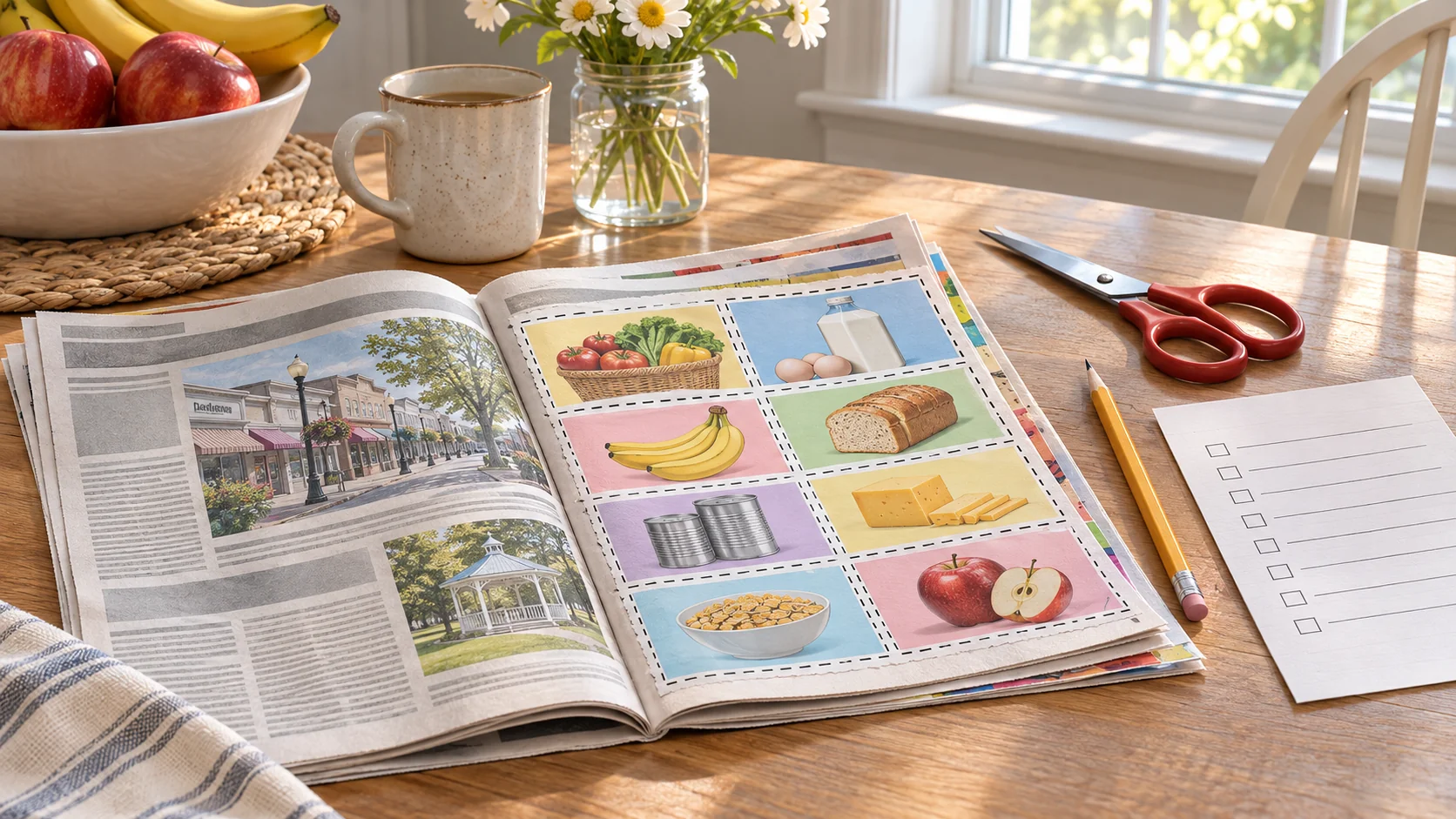
A coupon insert is a group of paper offers distributed with a newspaper, local publication or store mailing. If you do not subscribe to a paper, you may still find useful inserts without buying one. Start by asking people and organizations that already receive them, then check whether the offers match your stores and your shopping list.
In this guide
Availability depends on the publication, location and week. A place that distributes newspapers does not necessarily have spare inserts, and a free coupon is useful only if you can meet its terms before it expires.
Ask people who already receive a paper
Friends, relatives, neighbors and coworkers may receive inserts they do not intend to use. Ask them to set aside a complete insert or the specific categories you need. Agree on a convenient pickup instead of assuming discarded material is available.
A small exchange can save time: offer to pass along coupons that do not fit your household and keep only those for purchases you would otherwise make. Check the coupon terms before transferring or using an offer; some restrictions may apply.
Check community papers and local mailings
Some free community publications and advertising circulars carry promotions. Look at copies made available for readers in permitted public locations, or review the local mailers your household already receives. The contents can differ from the inserts in a paid Sunday newspaper, so check the actual offers rather than relying on a general insert schedule.
Do not remove pages from a copy that belongs to a business, library or another reader without permission. If you are unsure whether a copy can be taken away, ask the person responsible for it.
Ask a library or a local business
A library, café, hotel or other local organization may receive newspapers for visitors. It may also keep copies for other readers, return them to a distributor, or have no extras at all. Call or ask staff whether unwanted inserts are available after they no longer need the paper.
The same approach works with a nearby store that sells newspapers: ask what happens to unsold copies and whether staff are allowed to share an insert. Policies vary, so treat this as a question, not an entitlement. Do not enter a recycling or disposal area without permission.
Look at store circulars
A grocery store or pharmacy may place printed weekly advertisements near the entrance or distribute them with a local paper. Some contain store-specific offers or coupons. Check the dates and the participating location, then compare the shelf price and any required purchase with your usual alternative.
A circular is not always a manufacturer coupon insert. A store offer may work only at that retailer, may require a loyalty account, or may need to be activated digitally. If a paper option is important to you, confirm what the offer actually requires before making a trip.
Contact a brand through its official channels
A manufacturer may offer promotions through its website or respond to customer inquiries about current offers. There is no guarantee that a company will mail a coupon. Use contact details found independently on the company's own site, explain what information you need, and avoid sending unnecessary personal or financial details.
Be cautious with messages promising unusually valuable free coupons. The Federal Trade Commission notes that phishing messages can use free-item coupons as bait. Instead of following an unexpected link, find the company's official website yourself and check the promotion there.
Check whether a coupon is worth keeping
Before adding an insert to your shopping plan, read the offer and the retailer's current coupon policy. Pay particular attention to:
- Expiration: Can you use it before the printed deadline?
- Product details: Do the size, quantity and variety match what you need?
- Purchase requirements: Must you buy more than one item or meet another condition?
- Limits: Does the coupon restrict the number per transaction, household or visit?
- Store acceptance: Will your store accept this coupon with the other offer you plan to use?
Keep the original coupon in readable condition and avoid altering or copying it. If the wording is unclear, ask the retailer before checkout. A discount on a product you would not otherwise buy may increase your total spending rather than reduce it.
A simple weekly routine
- Make a short list of products your household actually needs.
- Check the inserts and circulars you already have, then ask one or two reliable sources about extras.
- Match an offer to the correct product and store, including any quantity or loyalty requirements.
- Compare the final price with a store brand or another available option.
- Put valid coupons with your shopping list and remove expired ones afterward.
This routine can help you avoid accumulating a large stack of offers that expire unused. It does not require buying multiple newspapers or signing up for an unfamiliar service.
Frequently asked questions
Can I always get Sunday inserts for free?
No. Distribution and spare copies vary by area and date. Asking someone who already receives a newspaper is often a practical starting point, but no location is guaranteed to have inserts.
Are store ads and manufacturer coupons the same thing?
Not necessarily. The issuer and the wording on the offer determine where and how it can be used. Check both the coupon and your store's current policy before attempting to combine offers.
Should I pay for an insert service?
This guide focuses on free sources. A paid service may add fees or shipping costs, and individual coupon terms may limit transfer or use. Review the full cost and terms before deciding; do not assume an advertised saving is guaranteed.
What if an online coupon offer looks suspicious?
Avoid unexpected links and verify the promotion through the retailer or manufacturer's official site. The FTC recommends recognizing common phishing signs and contacting the organization through a channel you know is genuine.
Sources
- MoneyPantry: Ways to Get Coupon Inserts for Free
- Federal Trade Commission: How to Recognize and Avoid Phishing Scams