How to Find Free Gardening Supplies: Seeds, Tools and Compost
Document-based research. This guide does not claim personal use or verified earnings. Read our disclosure.
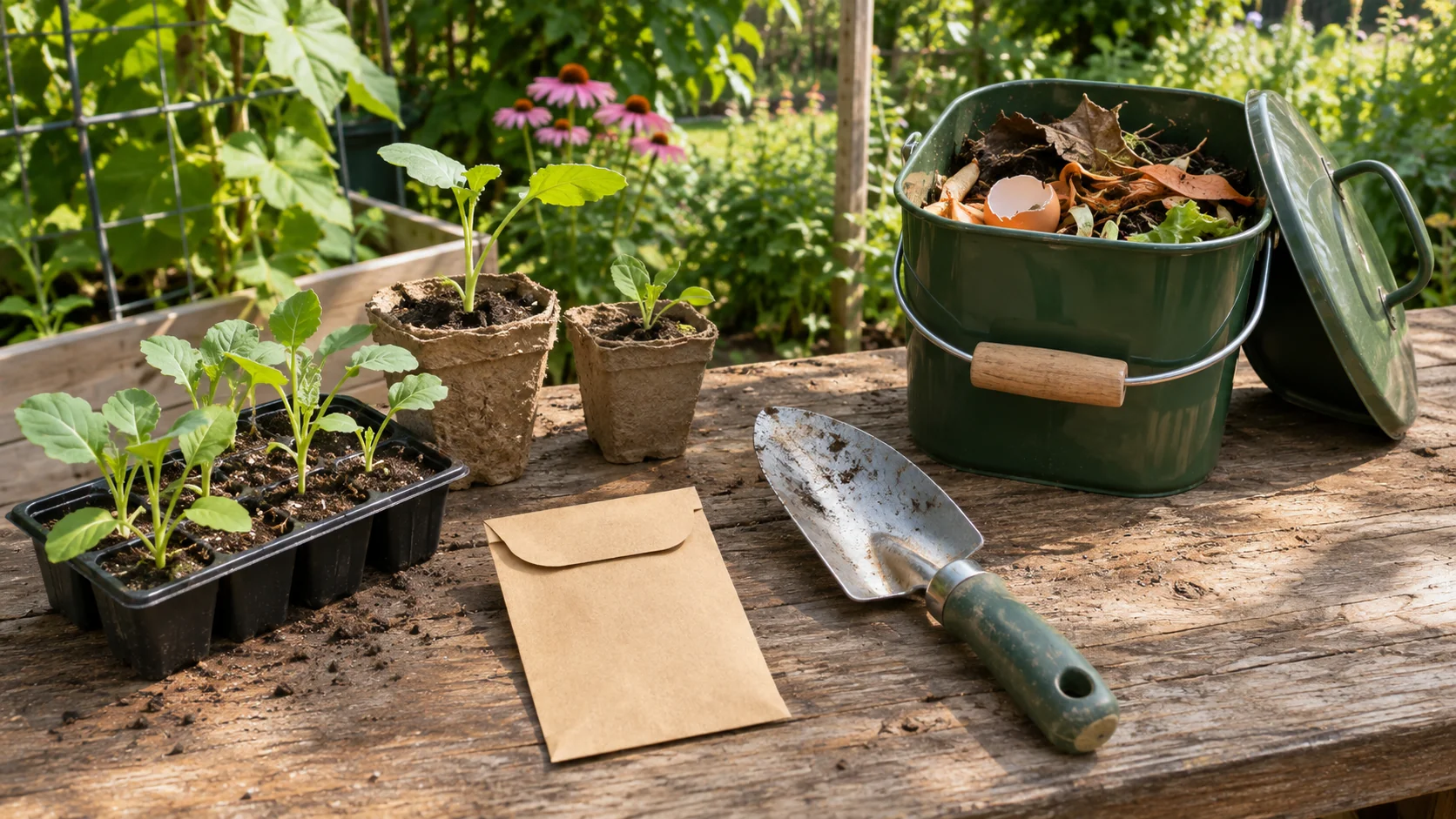
Starting a garden does not require buying everything at once. A local seed library, a tool-lending program, a community exchange or a municipal giveaway may offer some of what you need. The useful starting point is a short list of items and a few calls to check what is actually available nearby.
In this guide
This guide covers ways to look for seeds, plants, tools, containers and soil materials at no purchase price. It draws on the MoneyPantry guide to free gardening supplies and the primary sources linked below. We have not collected supplies from these programs. Availability, eligibility, seasons and pickup rules vary by location.
Make a small list before searching
Write down what you plan to grow, the space you have and which supplies are needed first. A container gardener may need a few suitable pots and seeds; someone preparing a larger bed may be looking for a shovel, compost and a way to move it. Borrowing an occasional-use tool may be more practical than finding a free one to keep.
Ask providers what is included, whether the material is suitable for your intended use and whether there are limits or registration requirements. An item advertised as free may still involve transportation or other costs.
Ask your library about seeds and tools
Some public libraries host seed libraries, gardening events or collections of useful items to borrow. A seed library may let people take a limited number of packets, sometimes with guidance about saving seeds later. Rules differ: do not assume returning seeds is required or that every library has a seed collection.
For a concrete example, Indiana University's library guide points to a local public-library seed collection and a community tool library. These are local examples, not a promise that the same services exist in every town. Ask your own library about membership, borrowing periods and current stock.
Before taking seeds, check the variety, growing season and packet instructions. If the label is missing or the type is unclear, ask the provider for information rather than guessing.
Look for seed swaps and gardening groups
Local gardening clubs, community gardens and extension events may arrange seed swaps or share spare plants. Some exchanges are gifts; others ask participants to bring something. Confirm the rules and whether the event is open to nonmembers before making a trip.
When accepting plants, ask what they are and inspect them for obvious pests or disease. The University of Illinois Extension's plant-sharing guidance discusses checking plants and cleaning tools to help limit the spread of invasive species and pests. Follow local plant-movement rules and seek local advice if you are unsure about a plant.
Check municipal compost and mulch programs
Some cities and counties offer compost or mulch to residents. Programs can be seasonal, require an appointment or proof of residency, and may require you to load your own containers. Do not assume a listed material is available every day or appropriate for every use.
For example, New York City's compost program describes resident eligibility and registration for certain events; its seasonal pickup sites are closed for the season at the time reviewed. Ventura's program describes local resident giveaways and a separate mulch location. These examples show why you should check your own municipality's current schedule and conditions.
Ask what the material is, what containers or tools to bring, whether loading assistance is provided and whether the provider gives guidance for garden use. Compost and mulch are different products; choose based on the provider's instructions and the needs of your garden.
Borrow or request secondhand tools
Tool libraries and community organizations may lend shovels, hand tools or other equipment. Before borrowing, check the membership rules, return date, condition requirements and whether any deposit or fee applies. A listing called a tool library is not necessarily free for every item.
Friends and neighbors may also lend or give away tools they no longer use. Check handles, sharp edges and moving parts, and ask how to use a tool safely. Clean borrowed items before returning them according to the lender's instructions. Avoid using equipment whose condition or operation is unclear.
Find containers and materials through local exchanges
Neighborhood reuse groups and community noticeboards sometimes list pots, seed trays, buckets or gardening tools. Read the listing carefully: an item might be free to collect but require transport, cleaning or repair. Confirm the pickup location and whether the item is still available before traveling.
If reusing a container for plants, choose one appropriate to the task and ask about its previous contents. Avoid containers that held unknown or hazardous substances. For edible plants, consult local extension guidance when you are unsure whether a material is suitable.
Check stores and community events without assuming a giveaway
Garden centers, community organizations and local events may occasionally distribute surplus seedlings or materials. Ask directly whether a giveaway is currently running and whether it requires a purchase, registration or membership. A past promotion or an item in a catalog does not establish a current free offer.
If a promotion requires a purchase or shipping payment, compare the total cost with what you actually need. Be cautious about an unfamiliar offer that requests financial details for a supposedly free item, and verify the organizer through a known official channel.
Questions to ask before pickup
- Is the item currently available, and is it free without a purchase or membership fee?
- Is the program limited to residents, members or a particular service area?
- Is registration required, and is there a quantity limit?
- What should I bring to collect or transport the item?
- Is the material labeled, and are there instructions or restrictions on use?
- For a loan, when is it due back and what condition is expected?
Frequently asked questions
Do all libraries offer free seeds?
No. Some libraries host seed programs, while others do not. Ask your local branch about current availability and participation rules.
Is municipal compost always free?
No. Some local programs offer free materials to eligible residents, but rules, quantities and schedules differ. Check the specific program before going.
Can I get gardening tools without keeping them?
Possibly. Ask a local tool library, community group or neighbor about borrowing. Check any membership requirements or fees first.
Are free plants always safe to share?
No. Identify plants, inspect for pests and follow local guidance on invasive species and plant movement. Ask a local extension office when uncertain.
What if nothing is available nearby?
Start with a small list, ask the library or community garden about future events, and consider borrowing from someone you know. Availability changes, so a provider may suggest another local option.
Take the next step
Start with one or two essentials and contact the local source before traveling. Confirm the cost, eligibility and condition of each item, and use the provider's instructions to decide whether it fits your garden.