How to Find Free Junk Removal: Local Pickup and Drop-Off
Document-based research. This guide does not claim personal use or verified earnings. Read our disclosure.
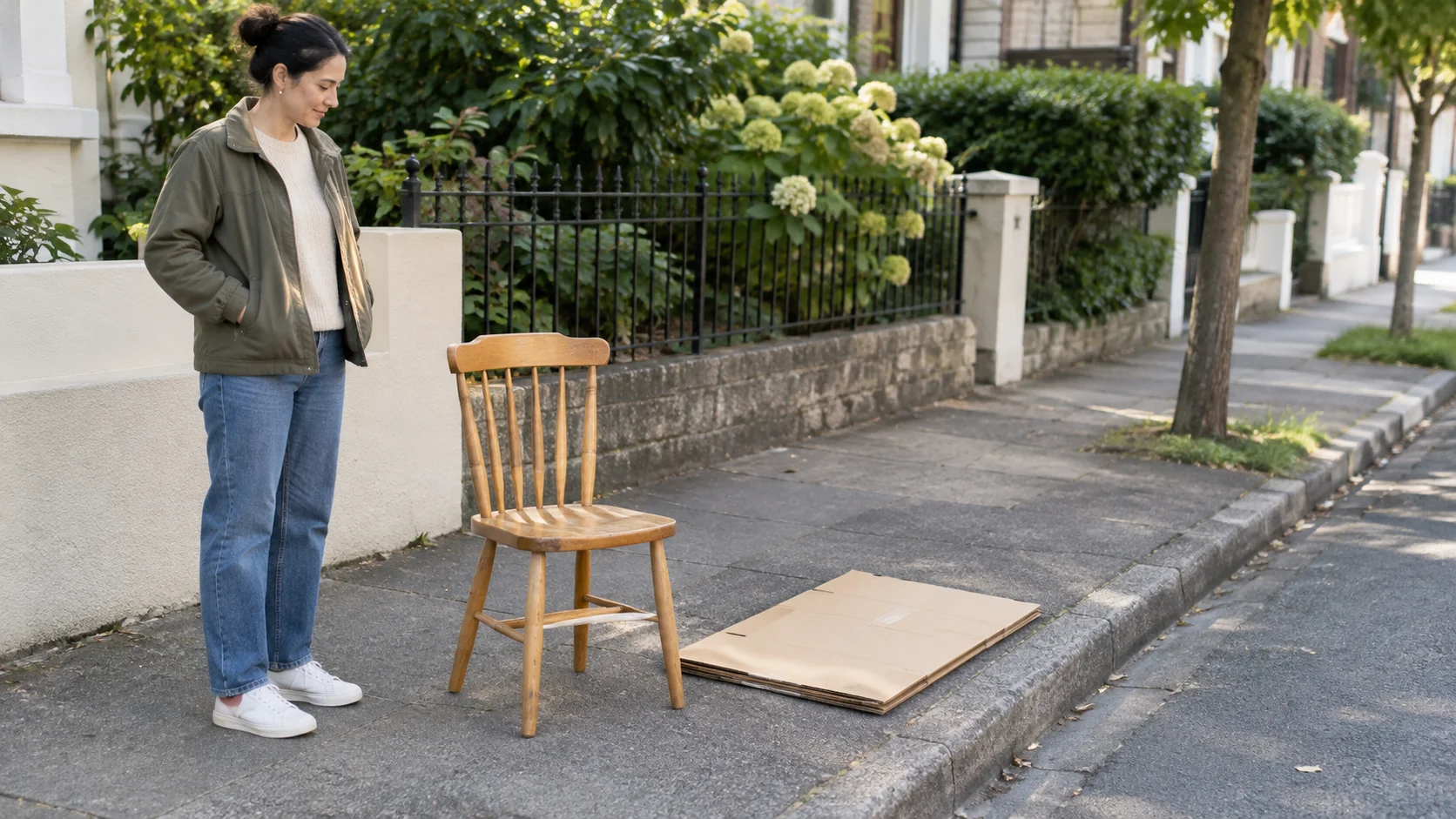
A free way to remove an unwanted item may be closer than a commercial junk-hauling service. Depending on where you live and what you need to move, your options can include a municipal bulk collection, a donation pickup, a local reuse group or a community drop-off event. None is guaranteed: the item's condition, your address and the provider's current rules matter.
In this guide
Start by separating usable goods from broken items and potentially hazardous materials. Then ask the relevant service exactly what it accepts, whether there is a charge and where the item must be placed. A free pickup of a reusable chair, for example, is not the same service as clearing an entire garage.
1. Check your city's bulk collection rules
Your city or county sanitation department may offer a large-item collection or direct residents to an authorized drop-off site. Search your municipality's official website for “bulk item collection,” or call its published service number. Ask whether your address is covered, which items qualify and whether an appointment or fee applies.
New York City, for example, describes free curbside removal of certain large residential items and gives different set-out instructions for recyclable and non-recyclable materials. Its rules also list special handling for items such as mattresses, electronics and appliances containing refrigerant. That is one local example, not a rule for every city; confirm your own area's instructions before placing anything outside.
If you rent, check whether the property manager must arrange the service or whether your building has a designated collection point. Do not put an item at the curb, in a shared bin or on another person's property without confirming permission and the correct timing.
2. Ask a donation center about usable items
Furniture, appliances or building materials in good condition may be suitable for donation. A charity can decline an item based on condition, safety, demand or the space it has available, so describe it accurately and ask before delivering it.
Habitat for Humanity says many of its ReStores offer free pickup for large donated goods, including furniture. Contact the individual store to check its service area, accepted items and whether pickup is available for your item. A donation pickup is designed for goods the organization can reuse or sell; it is not a general rubbish-removal service.
Before arranging pickup, ask whether the team collects from inside the home or only from an accessible location, and whether you need to disassemble the item. Never assume a service will carry an item down stairs or accept damaged upholstery.
3. Offer reusable goods locally
A local reuse group or community exchange can help connect an unwanted but usable item with someone who wants it. Give an honest description, include its dimensions and condition, and agree on a safe, convenient handoff. Remove any personal documents or stored data before giving away a cabinet, computer or other item.
Availability depends on who is nearby and interested. Do not count on a stranger to remove a large item by a deadline, and do not promise that an item is safe or working unless you know it is. Follow the platform's current rules and local guidance for safe exchanges.
4. Look for community cleanup or recycling events
Some local governments organize occasional collection events for bulky goods, electronics or other materials. Check the official announcement for the date, residency requirements, accepted items and any charges. An event described as free may still have limits or exclude particular materials.
Community cleanups can also depend on volunteers and may serve only a specific neighborhood. Contact the organizer before bringing anything. If you need to transport an item yourself, include fuel, vehicle access and loading help in your decision: a free drop-off is not necessarily a free door-to-door pickup.
5. Ask about scrap and appliance collection
A local recycler may accept certain metal items, but rules differ by material, condition and location. Ask for written or clear confirmation of any fee, accepted items and identification requirements. A scrap pickup should not be treated as a guaranteed way to dispose of every appliance.
Refrigerators, freezers and air conditioners may contain refrigerants and can have special handling rules. Contact your local waste authority or an approved provider instead of cutting lines, removing components or leaving the appliance outside. Ask about electronics, batteries and mattresses separately as well.
Keep hazardous materials out of a general junk pile
Paints, solvents, pesticides, certain cleaners, batteries and other household products may require special collection. The U.S. Environmental Protection Agency recommends checking with local waste authorities about permanent sites or collection days for household hazardous waste. Do not pour these products down a drain, onto the ground or into storm drains. Keep items in their original containers where possible and follow local handling instructions.
If you cannot identify a substance or container, ask the local hazardous-waste program how to handle it before moving or mixing anything. A donation center or ordinary bulk pickup may not accept it.
Questions to ask before booking
- What is accepted? Give the provider the item's type, size and condition.
- Is the entire service free? Ask about transport, labor, stairs and disposal charges.
- Where is pickup? Confirm whether the provider collects from inside, from a curb or from a drop-off site.
- What timing and limits apply? Check appointment requirements, quantity limits and collection days.
- What must I prepare? Ask about packaging, removing personal data and any special handling.
If no free option fits, request an itemized quote from a reputable local service and compare it with other options. Never pay someone who refuses to explain where the material will go. Rules and available services can change, so the local provider's current instructions take precedence.
Frequently asked questions
Will a charity collect broken furniture?
Not necessarily. Donation organizations generally set their own acceptance criteria. Describe the damage and wait for approval before arranging a pickup or delivery.
Is municipal bulk collection always free?
No. Some municipalities include a service for eligible residents; others charge, require appointments or do not offer it. Check your address and item with your local authority.
Can I leave items outside for someone to take?
Only where local rules and the property owner allow it. Check collection timing and permissions rather than assuming an unattended item can be placed on the curb.
Sources
- MoneyPantry: Free Junk Removal Near Me
- NYC Department of Sanitation: Large Items
- Habitat for Humanity: Donate Goods
- U.S. EPA: Household Hazardous Waste