How to Find Free School Supplies: Local Programs and Practical Steps
Document-based research. This guide does not claim personal use or verified earnings. Read our disclosure.
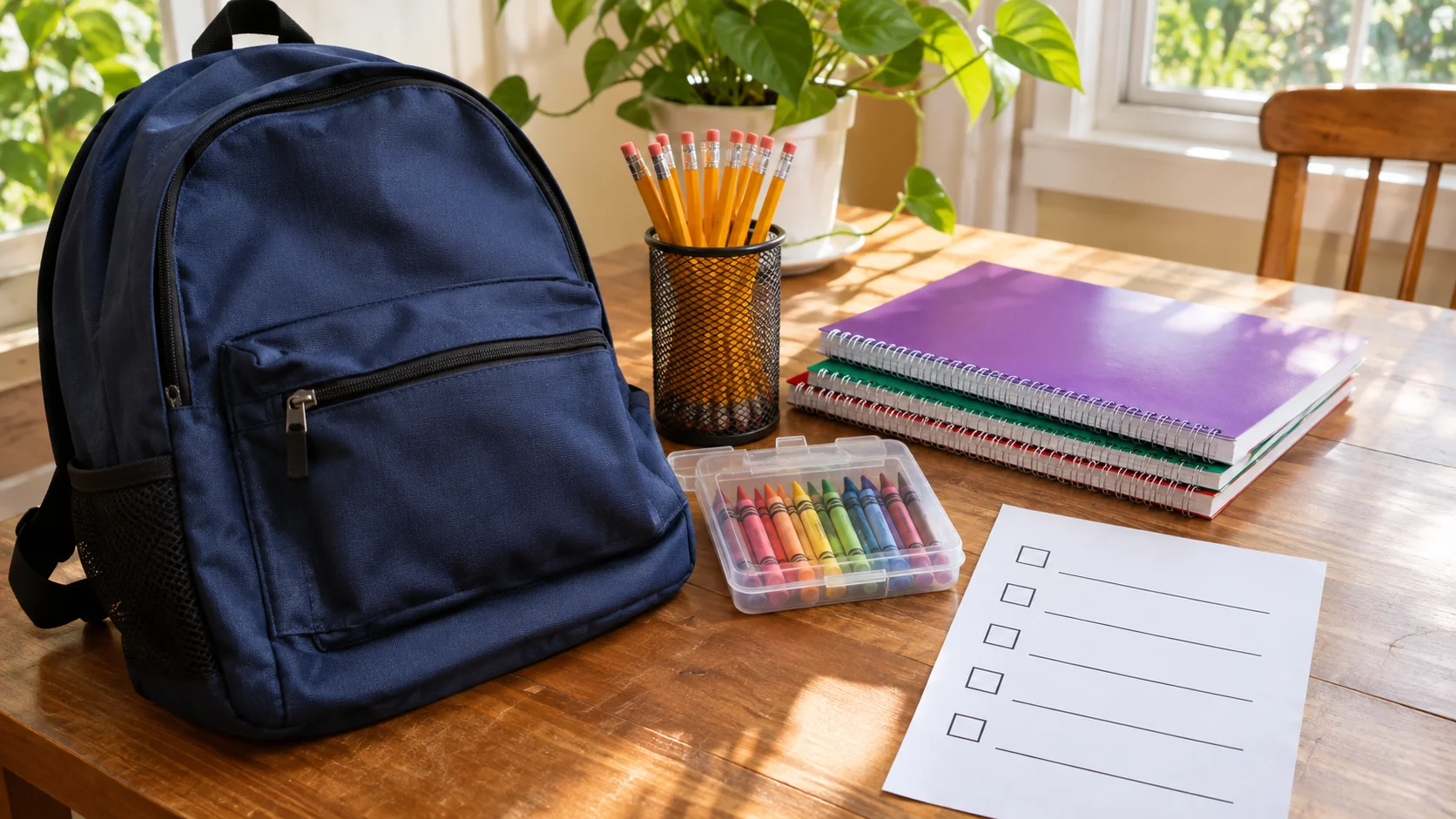
If a school supply list is more than your household can cover, start with the school and then look for local distribution events or referral programs. A teacher, school counselor or family liaison may know what is available nearby and whether a student can receive supplies privately.
In this guide
This guide covers practical ways to look for notebooks, pencils, backpacks and other essentials. It draws on public information from the organizations linked below and the MoneyPantry guide to free school supplies. We have not applied for assistance or verified inventory at any local event. Programs, eligibility and dates differ by location and may change.
Start with the school supply list
Ask the teacher which items are needed immediately and which can wait. Schools sometimes have donated supplies, a family resource office or a partner that can help; availability varies. If privacy matters, ask the counselor or school office how to request assistance discreetly.
Write down each child's grade, the items needed and the date they are needed. Ask whether the school has a list of local drives or can refer you to a partner. A short call can save a trip to an event that has already filled its registration slots.
Ask about local programs and distribution events
Community centers, charities, houses of worship and local organizations may arrange seasonal supply drives. Contact the organizer directly to check whether an event is open to the public, requires registration, serves a particular area or limits supplies to certain grades. Do not assume a national organization's program operates in every community.
Where 211 service is available, ask for school-supply assistance and the current contact information for local providers. A referral is a starting point, not a reservation. Confirm the details with the organization distributing the supplies.
Questions to ask include:
- What supplies are available, and are backpacks included?
- Who can participate, and is proof of residence or school enrollment requested?
- Is advance registration needed? Is there a deadline or waiting list?
- When and where is pickup, and does a child need to attend?
- Are supplies limited by grade, household size or local inventory?
Volunteers of America: Operation Backpack
Volunteers of America's Operation Backpack FAQ explains that regional teams work with schools and community partners to collect or purchase backpacks and school supplies. The organization says some backpacks go to children already served by its programs or housing, while some communities hold public distribution events or work with other local partners.
That distinction matters: a program name on a national page does not guarantee an open registration event near you. Use the organization's local information to find a nearby program and check whether it has a backpack sign-up. If no event is listed, ask the local team or your school about other referral options.
Ask teachers about resource centers
The Kids In Need Foundation national network describes centers that provide free supplies directly to teachers at under-resourced schools. These are generally teacher-facing resources, so families should not assume that they can visit a center and select supplies themselves.
Ask a teacher whether the school participates in a resource center or has another supply partnership. Rules can vary by center. For example, the foundation's Minnesota center describes specific school eligibility conditions for educators. Contact the relevant center or school for current requirements and availability.
Military families: Back-to-School Brigade
Operation Homefront's Back-to-School Brigade describes school-supply events for eligible military dependent children. Its program page says the events are for DEERS-enrolled dependents entering kindergarten through twelfth grade, and that supplies are limited with registration handled on a first-come basis.
Check the organization's current event information and eligibility rules before registering. Dates, locations and available slots change; a listed program does not mean an event is currently open near you. Families who do not meet these conditions can still ask a school or local community organization about other programs.
Look for neighbors giving away unused supplies
Local reuse groups, community bulletin boards and neighborhood exchange groups can be useful for unopened or gently used supplies. Ask what is included and arrange a safe pickup at an appropriate public location. Inspect items before accepting them and avoid sharing unnecessary personal information in a public post.
Not every item on a school list needs to be new, but check the school's requirements for materials that must be a particular size or format. A clean backpack or an unused notebook may be more useful than a large bundle that does not fit the student's needs.
If a program asks for documents or fees
Some providers may ask for information to confirm a service area, grade or eligibility. Ask why a document is required, how it will be used and whether there is a secure way to provide it. Share only what the verified organization requests for its program.
Free supply assistance should not require you to buy an unrelated product. If an unfamiliar listing asks for a payment, password or financial information, pause and contact the organization using a published official contact method. Do not assume a social-media post is current or official simply because it uses an organization's name.
A simple plan for this week
- Mark the essentials on each child's list and ask the teacher which items are most urgent.
- Contact the school counselor or family liaison about school supplies and referrals.
- Check local community organizations and, where available, call 211 for nearby resources.
- Review the eligibility and registration details for any relevant program or event.
- Confirm the pickup date, location, requested documents and remaining availability before traveling.
- If the first option is full, ask the school or organizer about another provider or a waiting list.
Frequently asked questions
Can I get supplies during the school year?
Some schools and teacher resource centers work beyond the back-to-school season, but availability depends on the local program. Ask the school or a nearby provider what is currently available.
Does every family qualify for every event?
No. Some events are public; others serve families in a program, a location, particular grades or a defined group. Ask the organizer about the specific event rather than relying on a general description.
Can a parent collect supplies directly from a teacher resource center?
Do not assume so. The Kids In Need Foundation network describes supplies going directly to eligible educators. Ask the teacher or local center how its process works.
Are the supplies guaranteed?
No. Inventory, event capacity and funding can change. Confirm a registration or referral and ask what happens if supplies run out.
Where should I begin if I am unsure which program fits?
Start with the child's school. The office, teacher or counselor can explain immediate needs and may know which local providers are accepting requests.
Take the next step
Contacting the school first and confirming local program details can make the search more manageable. Keep a short list of the supplies needed, verify the event and its eligibility, and ask about alternatives if an organizer cannot help.