Grocery unit prices: compare pack sizes before buying in bulk
Document-based research. Read our disclosure.
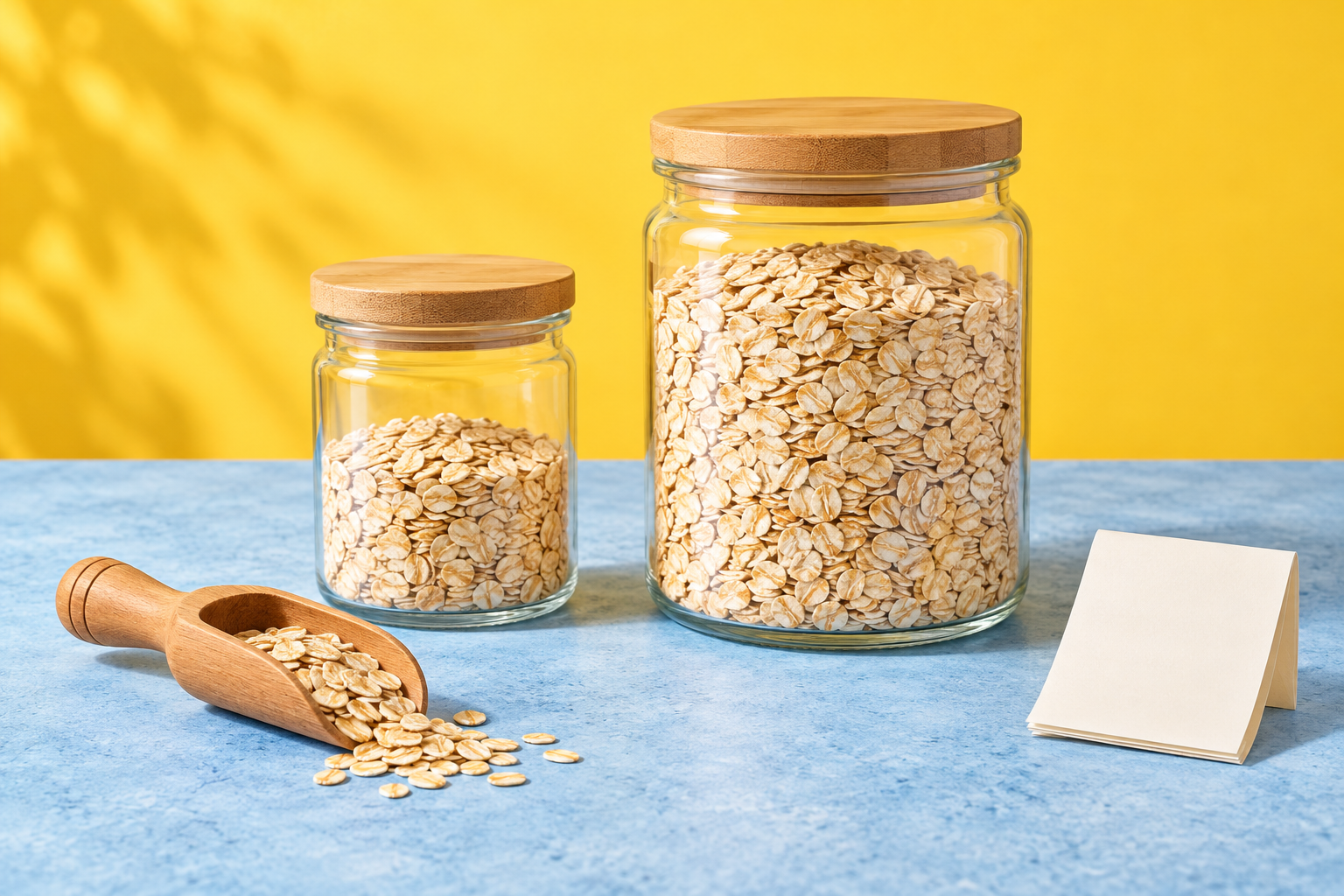
To compare grocery pack sizes, divide each pack's price by the same quantity, such as 100 grams or one litre. Then check whether you will use the larger quantity. A lower price per unit can still be poor value if the extra food is wasted, the product does not suit you or the purchase strains your budget.
In this guide
Compare the same product and the same unit
Unit pricing expresses a price against a standard quantity. The Australian Competition and Consumer Commission explains that it helps compare similar groceries across brands, pack sizes and offers. Its examples include measures by weight, volume or item. The calculation is useful elsewhere too, but local display rules differ; this guide does not apply Australian retail law to another country.
Start with products you would actually substitute for one another. Plain oats and a sweetened breakfast mix may have similar-looking packs while serving different needs. Decide what you want to buy before ranking the numbers.
Check the unit on each label. A price per kilogram cannot be compared directly with a price per 100 grams until you convert one of them. One kilogram is 1,000 grams, so a per-kilogram price divided by 10 gives the price per 100 grams.
Work out a missing unit price
Use this formula:
Price per 100 grams = pack price ÷ pack weight in grams × 100.
Here is an invented comparison using currency units, not current prices from a shop. A 400-gram pack costs 3.20 and a 900-gram pack costs 6.30.
On these assumptions, the larger pack has the lower unit price. You still spend 6.30 at checkout rather than 3.20, so the choice also depends on how much you need and can afford now. A lower unit rate does not make the total purchase smaller.
Replace the figures with the actual price and quantity for the offer you can buy. Record whether a displayed price requires a loyalty account, a minimum quantity or another condition. Do not include a discount that you cannot actually receive.
| Assumed pack | Assumed price | Calculated price per 100 grams |
|---|---|---|
| 400 grams | 3.20 | 0.80 |
| 900 grams | 6.30 | 0.70 |
Check the quantity you expect to use
The shelf calculation assumes the whole pack is useful to you. If you buy the hypothetical 900-gram pack for 6.30 but use only 600 grams, the cost per 100 grams used becomes 1.05: 6.30 divided by 600, multiplied by 100. That is higher than the smaller pack's assumed 0.80.
This is a planning example, not a measured food-waste result. It shows why pack size belongs alongside your household's normal use, storage space and the product's instructions. Do not buy extra simply to obtain the lowest displayed rate.
For a product you have never tried, a small pack can be a reasonable first purchase even if its unit price is higher. You are limiting the amount committed before learning whether you will use it. That is a decision about your needs, not a claim that small packs are always cheaper.
Compare offers without losing the purchase conditions
For a multi-pack, identify the total quantity included in the price. Keep units consistent and check whether the offer contains the same product, concentration or usable amount as the alternative. If the contents differ too much for a fair comparison, record that difference instead of forcing one number to decide the purchase.
Keep four details with a comparison: the item, the price you qualify for, the quantity and the date. Local prices and promotions can change. A receipt or current shelf label is more useful for your next shop than a claim that one chain is always the cheapest.
If the purchase depends on cashback, evaluate the price before the reward and check the conditions separately. Our pending cashback guide explains why an expected reward is not money already received.
Make one useful comparison on your next shop
Choose a product you buy regularly and compare two suitable pack sizes. Use the same unit, check the checkout total and decide whether you can use the quantity. Keep the result so you can compare the same item again when an offer changes.
This is a calculation guide, not a ranking of the cheapest stores. Our review process separates illustrative arithmetic from direct shopping evidence.
Sources
- ACCC grocery unit prices — accessed
How we prepare our guides: read our editorial standards.
Related guides
- BeFrugal Shopping Trips: match the Click ID before an inquiry
- Best Buy price matching: check the seller and purchase channel first
- How to cancel a free trial and keep confirmation
- Capital One Shopping rewards: check gift-card redemption and verification
- CardCash payments: check whether your card is being bought or listed