Where to Sell an Engagement Ring: Offers, Consignment and Safety
Document-based research. This guide does not claim personal use or verified earnings. Read our disclosure.
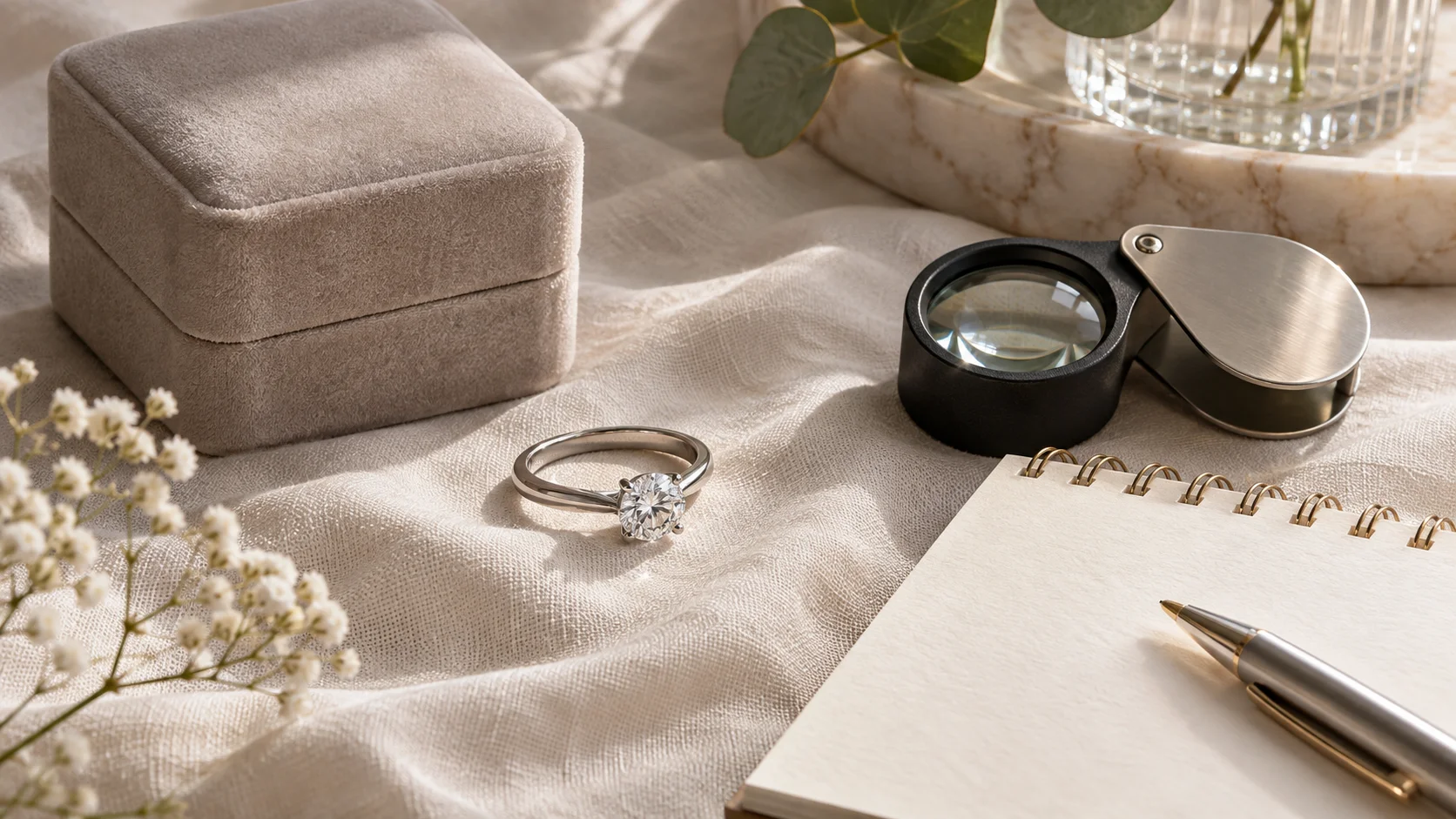
Selling an engagement or wedding ring can involve more than finding the highest advertised offer. The stone, setting, documentation, selling fees and time you are willing to wait all matter. Local jewelers, specialist buyers, consignment shops and online marketplaces use different processes. This guide compares those routes and the questions to ask before handing over a ring; it does not estimate the value of your particular item or guarantee a sale.
In this guide
Start by identifying what you have
Gather the original receipt, any grading report and an existing appraisal if available. Record the metal marks, ring size, known stone details and visible damage. A buyer may inspect or test the piece before making a final offer, so avoid describing a stone or metal as confirmed if you do not have reliable evidence.
A grading report and an appraisal serve different purposes. GIA says its reports describe identifying characteristics and quality; they do not state an appraisal value. An independent appraiser can provide a valuation for a stated purpose. Ask what the appraisal covers, what it costs and whether a fair-market-value appraisal would help with your decision. An insurance replacement figure is not necessarily an offer a buyer will pay.
Compare the main selling routes
| Route | How it usually works | What to check |
|---|---|---|
| Local jeweler or estate buyer | The business inspects the ring and may make an offer | Whether it buys your type of ring, the basis of the offer and payment terms |
| Consignment jeweler | The shop offers the ring for sale on your behalf | Commission, insurance, markdowns, payment and return of an unsold ring |
| Specialist online buyer | You provide details and may send the ring for inspection | Shipping coverage, revised offers, return costs and payment timing |
| Marketplace or auction | You list the item or agree to an auction process | Fees, verification, shipping, returns and the possibility of no sale |
| Pawn or precious-metal buyer | A business assesses the ring or its metal content | Whether the offer reflects the stone and setting, and whether it is a sale or a loan |
These are options to investigate, not endorsements of a particular business. Availability and terms vary by location and by item.
1. Ask local jewelers and estate buyers
Call ahead to confirm that a jeweler buys pre-owned engagement rings; some stores sell jewelry but do not buy from the public. Ask whether the inspection is free, whether an offer is binding and how payment is made. Bring relevant documents and request an itemized explanation of the offer where possible.
A direct buyer may value the stone, setting and resale prospects differently from an insurer. Comparing written offers can help you understand the range, but take time to compare the same item and conditions. You can decline an offer if you are uncomfortable with the price or process.
2. Consider consignment
An estate jeweler or consignment shop may display the ring and pay you if it sells. GIA describes consignment as a route where the seller commonly waits for a sale and the jeweler keeps a commission. The result depends on finding a buyer, so payment is not immediate or guaranteed.
Before leaving the ring, obtain a written agreement covering the listing price, commission, any scheduled discounts, insurance while the shop holds it, the length of the arrangement and how to retrieve it if unsold. Ask whether repairs, grading or marketing costs require your approval and who pays them.
3. Evaluate a specialist online buyer
Some businesses invite sellers to submit photographs or details and then send the ring for inspection. A preliminary estimate may change after inspection. Read the exact offer and terms before shipping: who arranges the label, what the package is insured for, when the offer becomes final and what happens if you decline it.
Check whether return shipping is insured, who pays for it and when the ring will be returned. Photograph the ring and any report before packing, keep tracking and receipts, and avoid sharing documents containing unnecessary personal information. Do not ship until you understand the coverage and process in writing.
4. List it or use an auction
An online marketplace or auction can let you reach buyers beyond your local area. You may have more control over the asking price, but you also take on listing, buyer communication, shipping and any applicable seller fees. Check whether the platform requires authentication, what claims you may make about a gemstone and how returns or disputes are handled.
Use your own photographs, show the setting and any damage, and describe the item according to documents you can support. eBay's published fee guidance says charges vary with category, price and other factors. Check the current schedule and restrictions for your country before calculating what you might keep. An asking price is not proof of a completed sale.
5. Understand pawn and metal offers
A pawnshop may offer a purchase or a loan secured by the item. These are different transactions: ask which one is being proposed and read the paperwork, including any repayment obligations and fees. Rules differ by location.
A precious-metal buyer may make an offer based chiefly on the metal. If the ring has a significant stone or a distinctive setting, ask explicitly how those components are treated and whether they will be returned or separately valued. Compare the full offer with other routes; do not assume a melt-value quote represents the entire piece.
Protect yourself during the transaction
- Confirm ownership and authority to sell. Resolve any ownership questions before transferring the ring.
- Document the item. Keep clear photographs, identifying details and copies of relevant documents, with personal information protected.
- Compare complete terms. Look at fees, inspection conditions, insurance, returns and payment timing as well as the headline offer.
- Use a secure exchange. Meet at a reputable business or another appropriate public place and follow the platform's safety guidance.
- Verify payment independently. Do not release the ring based only on a screenshot or a message claiming that funds were sent. Never share a one-time code or account password.
Be cautious of pressure to ship immediately, pay an unexpected fee or move to an unfamiliar payment page. For a valuable or unusual item, consider independent professional advice before deciding.
Common questions
Will I receive the appraisal amount?
An appraisal is an opinion of value for a particular purpose, not a guaranteed purchase offer. Ask the appraiser which type of value is being estimated and compare actual offers separately.
Is a GIA report a price appraisal?
No. GIA says its reports describe a gemstone's identifying and quality characteristics and do not state an appraisal value. An independent appraiser can assess value for a specified purpose.
Is selling locally always faster?
A local buyer may make an offer after inspection, while consignment may require a later sale. Ask the individual business about its inspection and payment process rather than assuming a timetable.
Should I accept the first offer?
You do not have to. If time and circumstances permit, compare offers and the complete terms. Costs, shipping risk and the effort involved can make two similar headline prices quite different.
Sources and scope
This guide uses MoneyPantry's engagement-ring selling article as the topic reference, GIA's guide to selling jewelry and GIA's explanation of grading reports for valuation context, and eBay's seller-fee guidance for marketplace costs. No personal sale, offer, appraisal or earnings are claimed. Check current terms with each buyer.
Related guides
Compare ways to sell used LEGO